I experienced a Taiwanese tea ceremony led by a certified tea master at a Western-style residence in Kobe’s Kitano district that is normally closed to the public.
This event combined a medicinal cuisine (herbal wellness) seminar with a Taiwanese tea ceremony: the first half introduced the basics of medicinal food culture, followed by a tea session where participants could slowly savor Taiwanese tea.
A Taiwanese Tea Ceremony That Begins in Silence
The table was neatly arranged with tea utensils unique to a Taiwanese tea ceremony.
The sound of boiling water, the gentle movements as hot water meets the tea leaves—each action created a calm, unhurried rhythm that naturally encouraged a sense of quiet focus. Sitting silently and simply observing the process felt like a small luxury, a moment removed from everyday life.
A Table Lined with Tea Utensils, Wrapped in a Gentle Atmosphere

A Taiwanese tea ceremony led by tea master Michi Tsuchiura.
The tea was prepared by Michi Tsuchiura, a certified Taiwanese tea master.
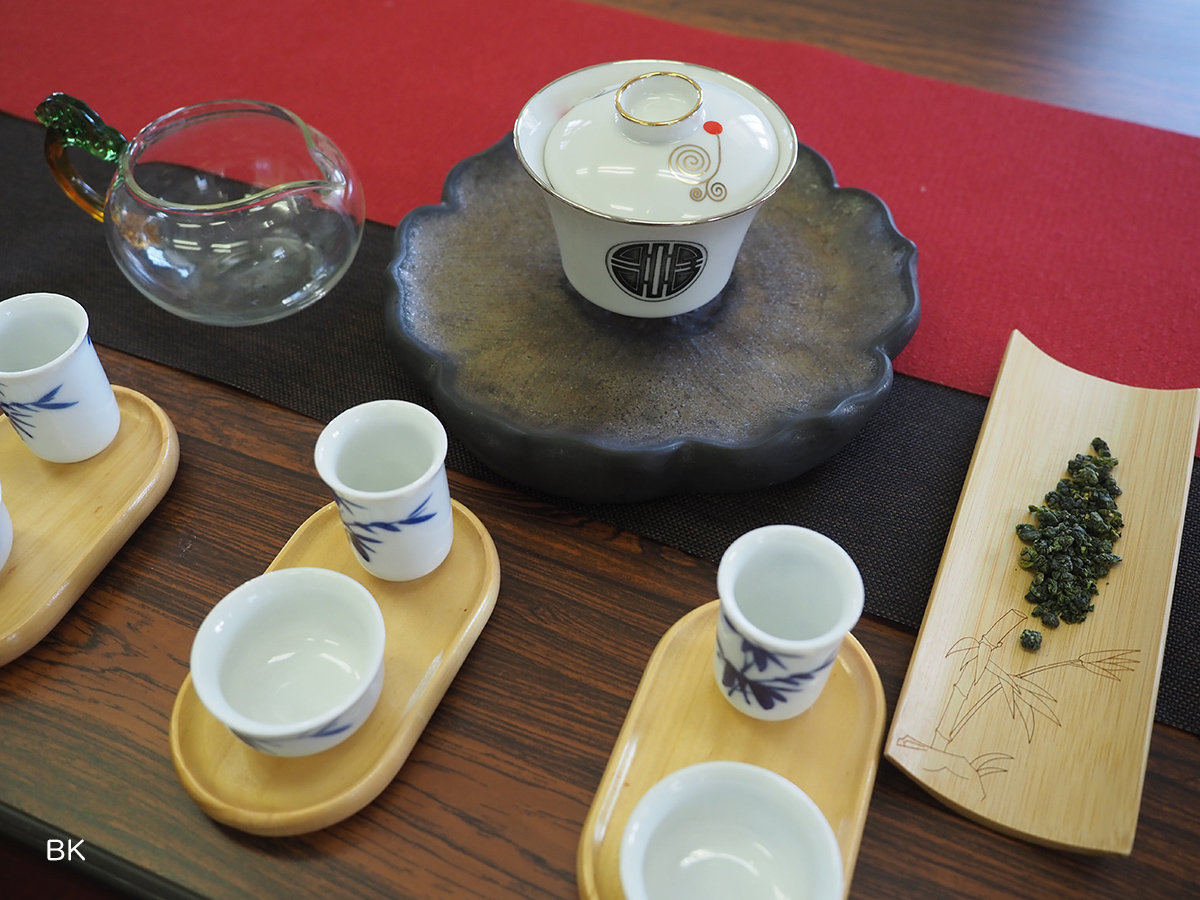
Tea utensils and tools used during the tea ceremony.
Even just looking at the carefully arranged tea utensils evoked a refined, Chinoiserie-inspired atmosphere.

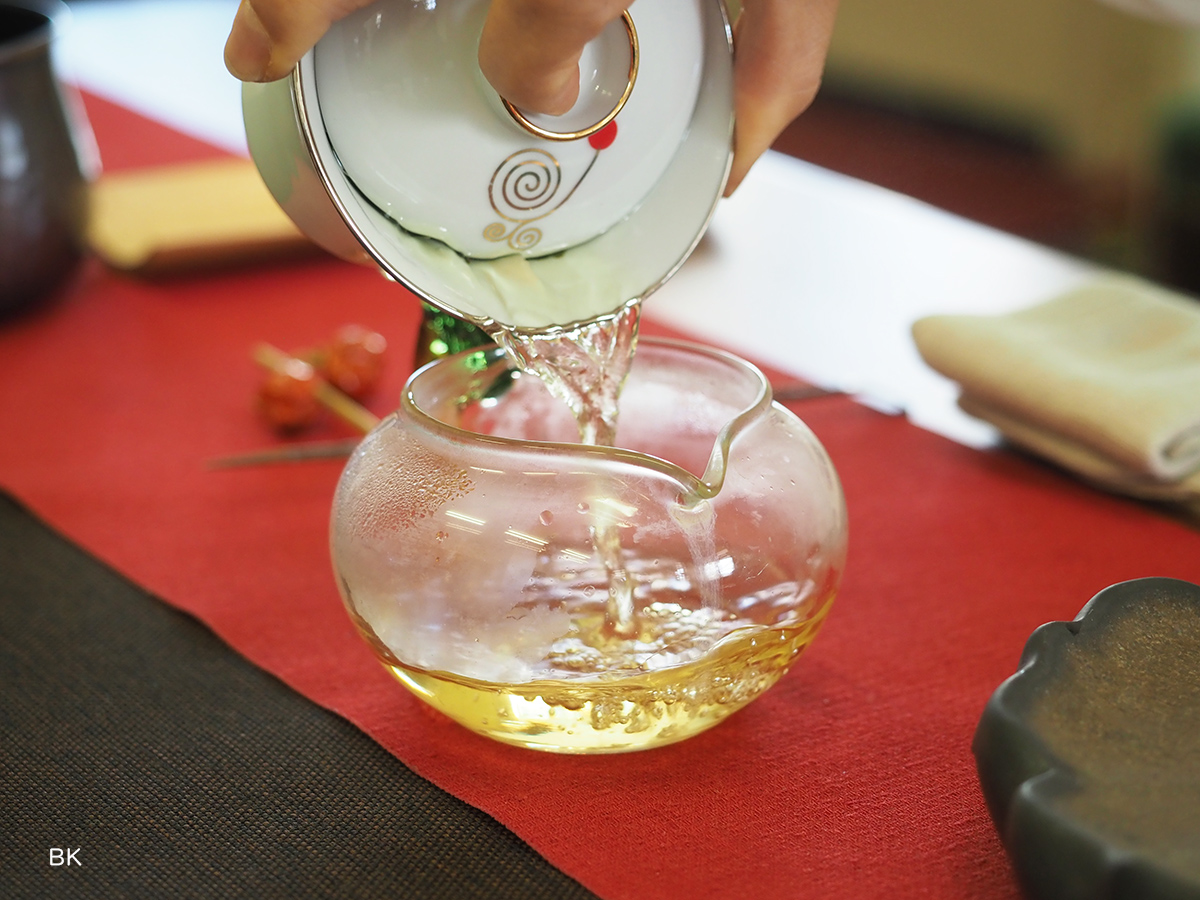
Hot water being poured over tightly rolled tea leaves.
The tea served that day was Dayuling (Da Yu Ling), a high-mountain tea from Taiwan.
Instead of using a teapot, the first pour of hot water is used to rinse the tea leaves and is not consumed.
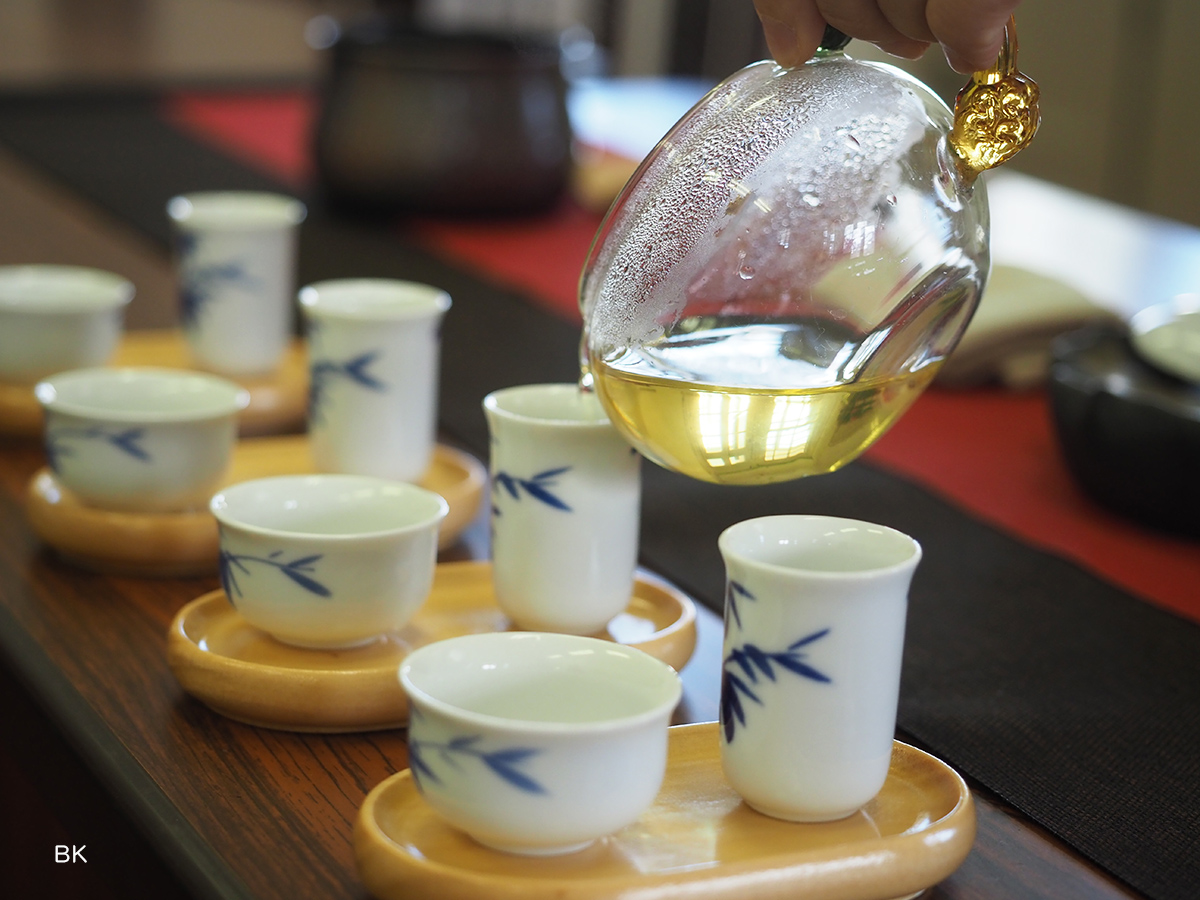
The quiet moment of brewing tea feels calm and soothing.
The tea is enjoyed starting from the second infusion. Prepared through a meticulous process, the tea revealed a gentle aroma, subtle sweetness, and a smooth, supple mouthfeel that lingered pleasantly.
Cups for Aroma, Cups for Taste
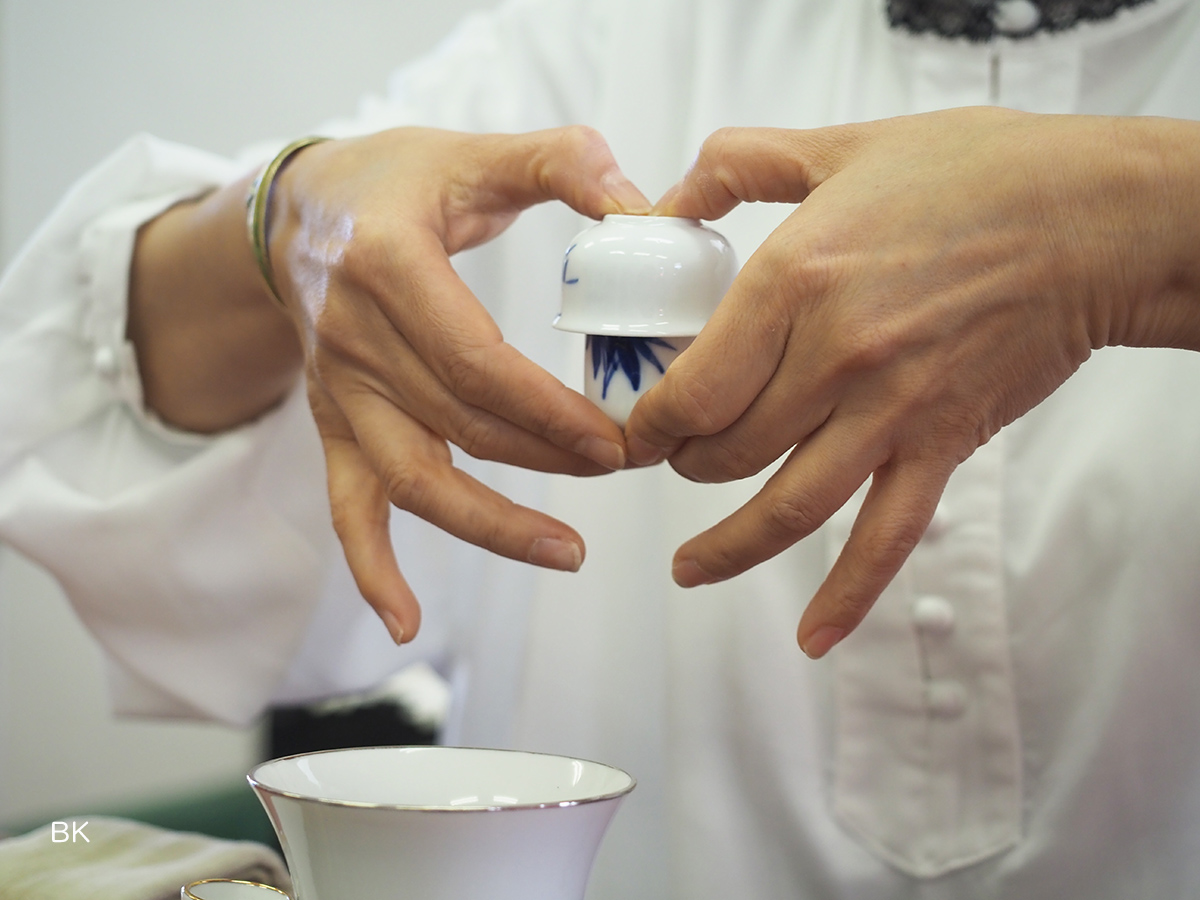
The beauty of the tea-brewing gestures is considered important; the fingers forming a heart shape are especially charming.
In a Taiwanese tea ceremony, different cups are used—one to appreciate the aroma and another for drinking the tea.
The graceful act of transferring the tea between vessels is also one of the highlights of the ceremony.
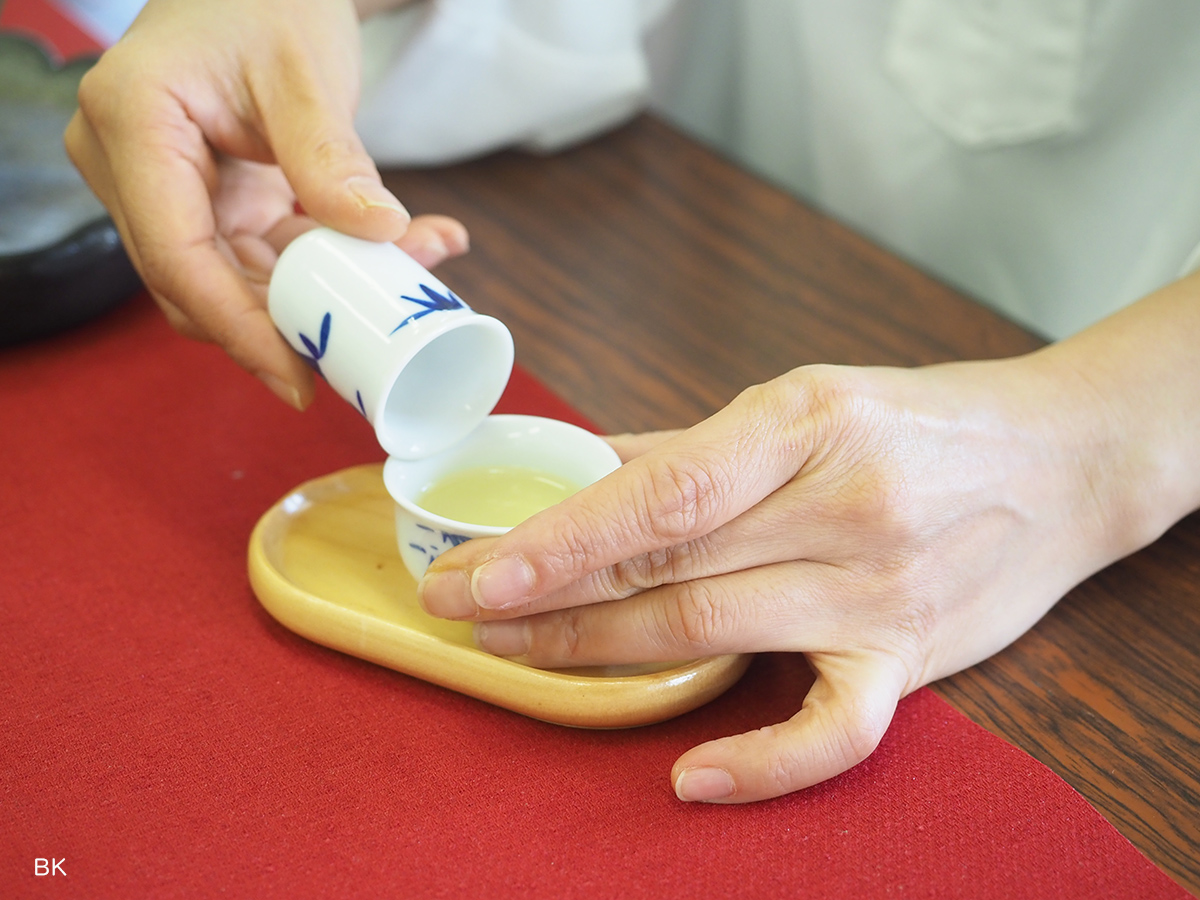
The act of transferring the tea from one vessel to another is also a highlight of the ceremony.
These beautiful, efficient movements are said to be a hallmark of a tea master’s skill. As sight, aroma, and taste come together, the tea experience unfolds as a moment to be enjoyed with all five senses.
The Setting: A Normally Closed Historic Residence
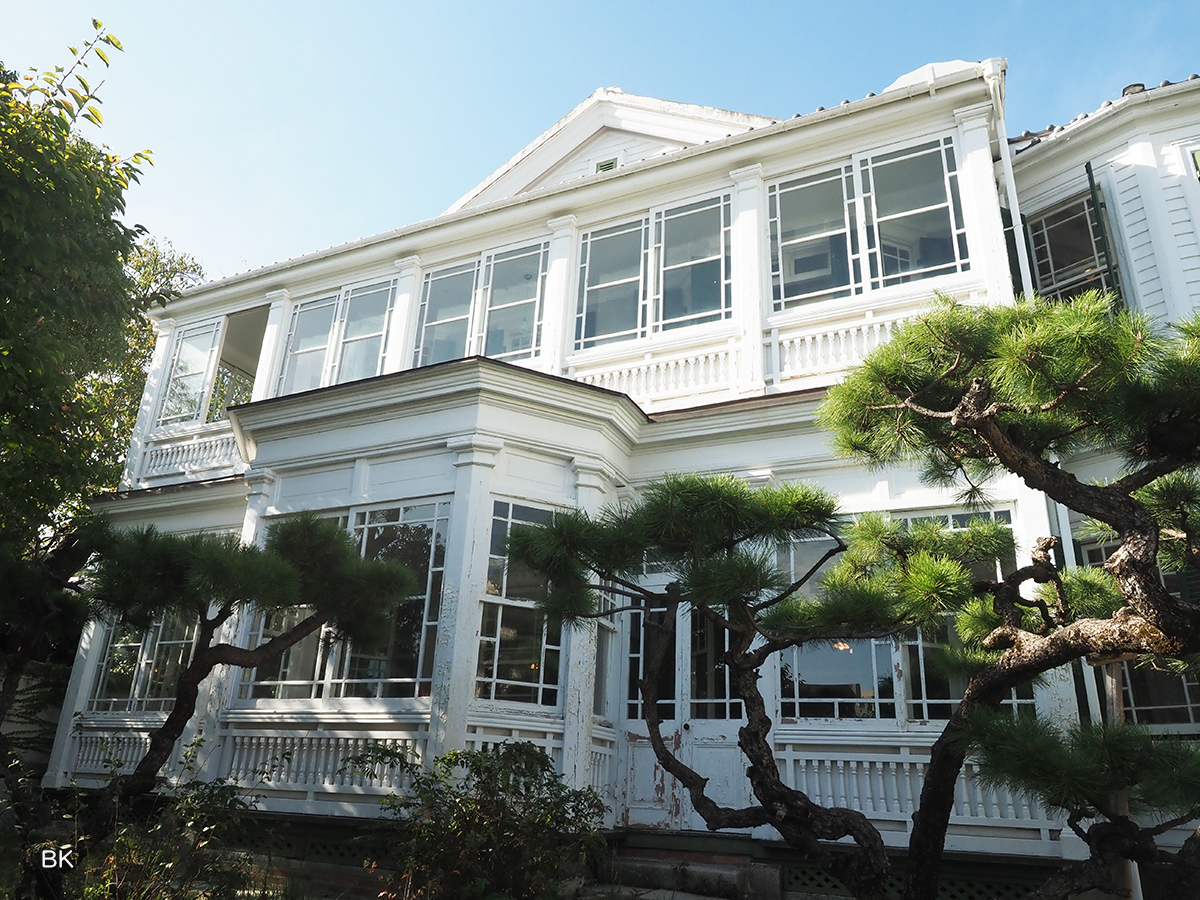
The venue is a historic Western-style building in Kobe that is usually closed to the public.
The venue was a historic Western-style residence in Kitano, currently used by the Kobe Chinese Association.
As the building is usually not open to the public, this event offered a rare opportunity to enjoy Taiwanese tea within a piece of Kobe’s architectural history. Soft light filtering through the windows and the elegant presence of the building enhanced the atmosphere of the tea ceremony.
A Kobe Experience Steeped in an Exotic Ambience
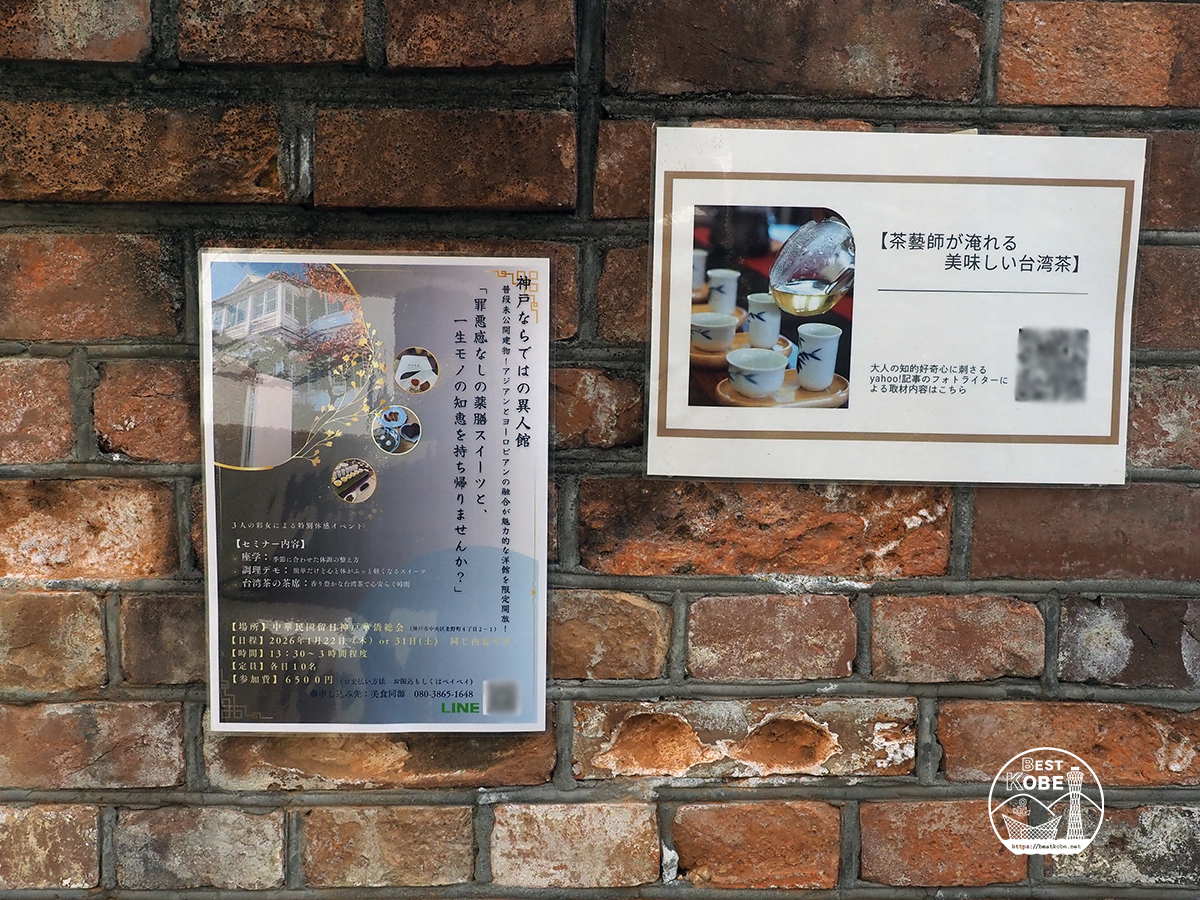
The event poster.
With no rigid rules or formalities, the Taiwanese tea ceremony was easy to join—even for first-time participants.
This experience, which brings together tea, architecture, and quiet moments, felt distinctly Kobe-like, infused with the area’s characteristic international charm. For lovers of tea and historic buildings alike, it promises to be a memorable experience.
According to the organizers, this tea ceremony is held on a regular basis.